

full read
In one future, humans began to lose their sense of smell — a quiet loss in the story of environmental change. This fading sense once bound us to memory, to place, and to the more-than-human world. Eventually, humanity’s disconnection from nature was recognised as a global health crisis.
In response, the Ministry of Culture for Breath was established, positioning scent as both a vital bridge to the natural world and a builder of empathy between species. Its first public initiative — auraforest.com — is a digital library of lost scents from native pine forests. It invites you to smell with your imagination, to sense what can no longer be sensed.
Olfactory imagination — the brain’s ability to remember and evoke scent even in its absence — becomes your guide. Through five audio-visual capsules, AuraForest reveals the invisible biochemical conversations between plants, fungi, bacteria, and insects surrounding the once-common, now-lost Scots Pine. This unique archive translates these exchanges into neuroaesthetic experiences, reminding us that we are part of a living, breathing, loving, fighting, smelling, listening, and conversing organism.
presents
A DIGITAL ARCHIVE OF MULTISPECIES SCENTS FROM NATIVE PINE FORESTS
The project explores an unsettled future, questioning humanity’s relationships with other living entities. It proposes a series of video capsules representing scents produced by select organisms, catalogued as digital Library of Scents.
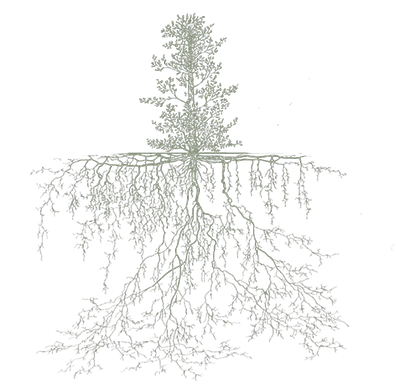
The digital archive communicates the diverse biogeography of the air created by organisms (plants, fungi, bacteria, insects) surrounding a single tree: the Scots Pine, highlighting the value of breath — and the importance of our sense of smell — by examining them within a digital vacuum.
AuraForest is a catalogue of potential loss: loss of breath, loss of smell, loss of species.
—Department of Culture for Breath in 2050 unveiling The Library of Multispecies Scents—a digital archive excavated from native pine forests.
“Breath is a temporary pact of volatile exchange between the animal and plant kingdoms.”
Department of Culture for Breath

WHAT
AuraForest — a Digital Library of Lost Scents — explores an unsettled future:
a world where humans are losing their sense of smell.
In this future, the Department of Culture for Breath has been established —
its first digital archive preserving stories of multispecies fights, romances, and struggles.
Through five audiovisual capsules, AuraForest reveals the invisible biochemical conversations between plants, fungi, bacteria, and insects that once surrounded the now-lost Scots Pine —
translating scent into sound and image,
and creating a memory of what can no longer be smelled.
By highlighting the value of breath — and the importance of our sense of smell —
AuraForest examines what remains when sensory connection exists only within a digital vacuum.

HOW
Olfactory imagination — the brain’s ability to recall and evoke scent even in its absence — becomes your guide.
Each digital “scent” is a fragment of a vanished forest, reimagined through the artist’s sensory translation.
Drawing on neuroaesthetic mechanisms, auraforest explores how the brain can imagine scent through sight and sound.
Specific frequencies, light patterns, and color palettes correspond with olfactory qualities — forming an audiovisual multisensory experience.
It is a reminder that our senses are deeply interconnected —
that vision and sound can awaken the memory of scent,
and that imagination itself is a form of perception.

WHY
A catalogue of potential loss:
loss of breath, loss of smell, loss of species — and the fading of empathy toward other living entities.
AuraForest invites your body to imagine the smells of the forest.
It is designed to awaken somatic memory — to remind us what it means to belong.
By reimagining the forest not as a passive resource but as an active communicator, AuraForest transforms our relationship with nature into one of shared ecology.
This digital collection translates scents into audiovisual experiences — revealing other species as living, feeling participants in a collective organism.
It uses our senses to bring us closer, reminding us that we are all part of the same living, breathing, fighting, loving, and decaying system.
AuraForest invites you to smell with your imagination —
to sense what can no longer be sensed,
and to remember that we are part of a living, loving, fighting, chatting, breathing organism.


AuraForest — a Digital Library of Lost Scents — explores an unsettled future: a world where humans are losing their sense of smell. In this future, the Department of Culture for Breath has been established — its first digital archive preserving stories of multispecies fights, romances, and struggles. Through five audiovisual capsules, AuraForest reveals the invisible biochemical conversations between plants, fungi, bacteria, and insects that once surrounded the now-lost Scots Pine — translating scent into sound and image, and creating a memory of what can no longer be smelled. By highlighting the value of breath — and the importance of our sense of smell — AuraForest examines what remains when sensory connection exists only within a digital vacuum.
Inhale
(when)
A world where humans are losing their sense of smell — and belonging.

The Department of Culture for Breath is born. Its first digital archive gathers invisible stories of a forest — multispecies romances, struggles, and conversations between plants, fungi, bacteria, and insects.
Exhale
(what)
A digital library of lost scents,
auraforest invites the body to smell with imagination.

Five audiovisual capsules translate forest scents into frequencies, light, and colour — reconstructing the memory of what can no longer be smelled, describing scent’s origins and sensory tones.
Sense
(how)
Olfactory imagination — the mind’s way of sensing scent when it’s no longer there — becomes your guide.

Drawing on neuroaesthetic mechanisms, auraforest explores how the brain can imagine scent through sight and sound — awakening somatic memory and empathy toward other living entities. Each capsule reveals other species as living, feeling participants in multisensory organism.
Remember
(why)
Reimagining the forest as an active voice in a shared ecology.

By valuing breath — and the act of sensing itself —
this work asks what remains when sensory connections exist only within a digital vacuum.
A digital echo of the forest,
preserved within a catalogue of potential loss —
of breath, of smell, of species.